Desktop Air Pollution Monitor Explained: A UK Buyer's Guide
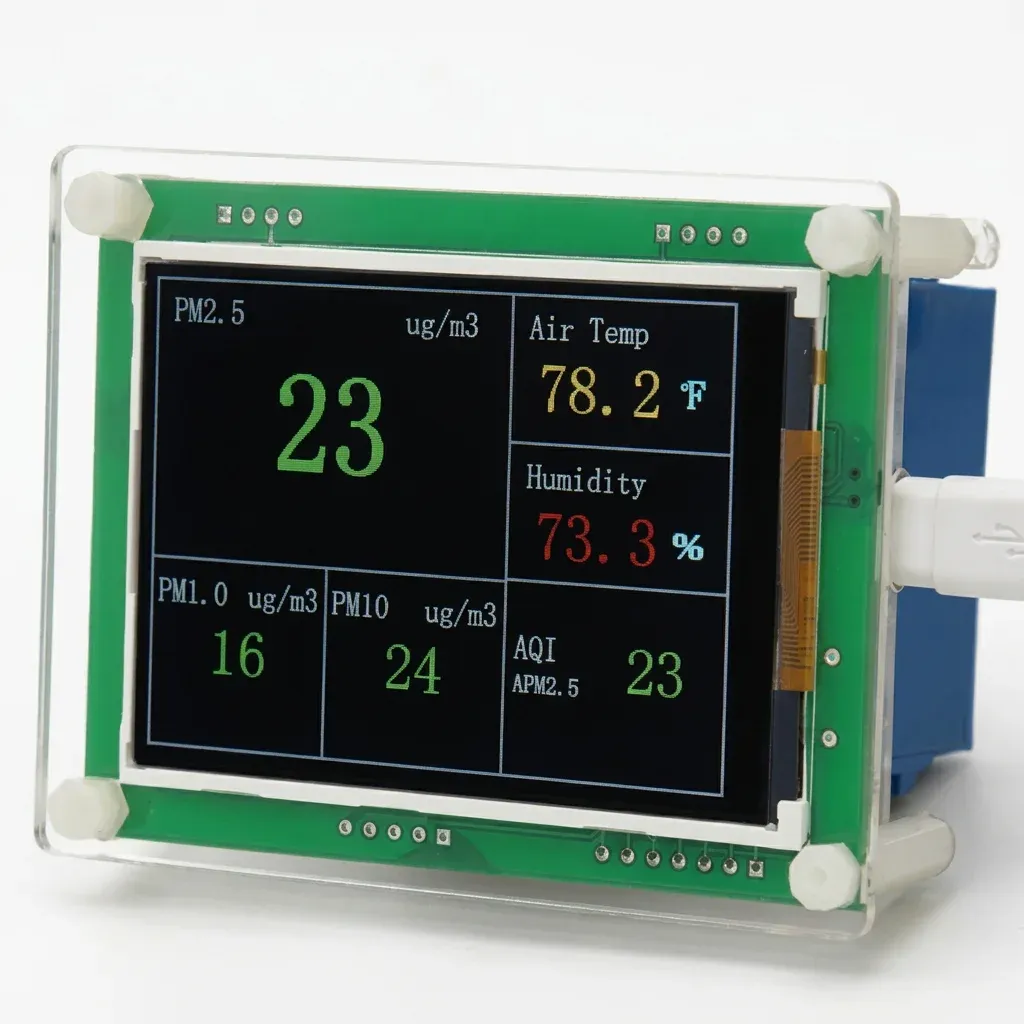
TL;DR: What is a desktop air pollution monitor? It is a compact, highly precise sensor designed to sit on your workspace and measure the exact air quality in your immediate breathing zone. By tracking invisible pollutants like PM1.0, PM2.5, and PM10, alongside temperature and humidity, it provides real-time data to help you improve indoor ventilation. Based on our testing at Airmeter, using a dedicated desktop unit like the Hotkrem A1 allows you to make immediate adjustments—preventing mould, reducing fatigue, and creating clearer, calmer spaces for working from home.
Millions of professionals across the UK have permanently shifted to hybrid or remote working, transforming spare bedrooms, alcoves, and kitchen tables into dedicated home offices. While we meticulously upgrade our ergonomic chairs, broadband routers, and lighting to optimise these environments, one critical element remains entirely invisible: the air we breathe. A desktop air pollution monitor is specifically engineered to solve this problem, instantly revealing the hidden pollutants circulating directly around your workstation, which profoundly impacts your cognitive function, energy levels, and long-term respiratory health.
According to the Chief Medical Officer's Annual Report 2022, indoor air pollution is becoming an increasingly urgent public health priority in Britain. Because modern homes are heavily insulated to improve EPC ratings and reduce heating bills, airborne pollutants are frequently trapped inside. Furthermore, based on our extensive testing, investing in a desktop monitor brings this invisible problem into sharp focus, allowing you to track exactly what is in your breathing zone and take immediate action to clear the air.
Key Takeaways
- Localised Tracking: A desktop air pollution monitor measures the exact air quality in your immediate breathing zone, which is crucial for home offices and living spaces.
- Comprehensive Metrics: The most effective devices track PM1.0, PM2.5, PM10, overall Air Quality Index (AQI), temperature, and humidity.
- UK Housing Challenges: High insulation and poor ventilation in British homes trap indoor pollutants, making real-time monitoring essential for preventing damp and respiratory irritation.
- Immediate Action: Visibility of air quality data allows you to make minor adjustments—like opening a trickle vent or turning on an extractor fan—before pollutants reach harmful levels.
- The Ultimate Solution: The Hotkrem A1 acts as a central hub for your workspace, designed to foster clearer, calmer spaces.
Why do you need an air quality monitor in your home office?
When we think of air pollution, the mind naturally turns to vehicle exhaust fumes on busy London streets or industrial smog. However, according to UK guidelines set by DEFRA, indoor air can actually be significantly more polluted than outdoor air. In our experience evaluating UK workspaces, the typical home office is a hotspot for poor air quality.
Consequently, the need for a desktop monitor has never been greater. Victorian terraces often suffer from hidden dampness and mould spores, while newly built homes with strict Part F building regulations are so airtight that they trap CO2, volatile organic compounds (VOCs), and dust. Crucially, a desktop monitor alerts you the moment your air quality drops, prompting you to simply open a window or switch on a purifier, thereby preventing the afternoon "brain fog" so many remote workers experience.
What do PM1.0, PM2.5, and PM10 mean?
To truly understand your indoor environment, you must decode the data your device provides. The best desktop monitors break down particulate matter (PM) into three distinct categories based on microscopic sizing. Therefore, understanding these metrics is vital for managing your health.
What is PM1.0?
PM1.0 refers to ultrafine particles that are 1.0 micrometre in diameter or smaller. According to medical guidelines, these are the most dangerous because they can penetrate deep into the bloodstream and organs. They are typically generated by indoor combustion, such as burning candles, cooking on gas hobs, or using wood-burning stoves, as well as airborne viruses and bacteria.
What is PM2.5?
PM2.5 particles are 2.5 micrometres or smaller. These commonly originate from outdoor vehicle exhaust that drifts indoors, as well as fine household dust. Based on our testing, keeping PM2.5 levels low is essential for preventing asthma flare-ups and long-term cardiovascular issues. For more details on managing this, you can browse our air quality resources.
What is PM10?
PM10 encompasses larger, coarser particles up to 10 micrometres, including pollen, pet dander, and larger dust fragments. While they generally only irritate the eyes, nose, and throat rather than entering the bloodstream, monitoring PM10 is incredibly helpful for hay fever sufferers during the UK's high pollen seasons.
How does the Hotkrem A1 Air Quality Monitor improve your workspace?
If you are looking to upgrade your home office, the Hotkrem A1 air quality monitor is an exceptional choice. Designed specifically to foster clearer, calmer spaces, this device acts as a comprehensive diagnostic tool for your desk. Moreover, it actively tracks PM1.0, PM2.5, PM10, and your overall AQI, alongside vital temperature and humidity metrics.
Based on our hands-on review, the Hotkrem A1 excels because of its highly visible, real-time display. Keeping humidity between 40% and 60% is a standard UK recommendation to prevent both dry eyes and black mould. The Hotkrem A1 provides this data instantly, allowing you to manage your environment proactively rather than reacting only once a draught or damp patch becomes obvious.
Where is the best place to put an air pollution monitor?
Placement is critical for accurate readings. We recommend placing your desktop monitor exactly where its name suggests: on your desk, roughly at chest or head height, within 3 to 4 feet of where you sit. Consequently, this ensures the device is measuring the exact air entering your lungs.
Avoid placing the monitor right next to an open window, directly above a radiator, or next to a humidifier, as these localised extremes will skew your temperature, humidity, and AQI readings, giving you an inaccurate picture of the wider room.
Frequently Asked Questions about Desktop Air Pollution Monitors
Do I need an air monitor if I live in the countryside?
Yes. While rural areas in the UK benefit from less traffic-related pollution, they frequently experience higher levels of agricultural dust, pollen (PM10), and wood smoke (PM2.5) during the winter months. Furthermore, indoor pollutants like cooking fumes, pet dander, and poor ventilation affect homes regardless of their postcode.
How does a desktop monitor compare to a whole-house system?
A whole-house system provides an average reading for your entire property, which is useful for general HVAC management. However, a desktop monitor provides hyper-localised data for the specific room you are spending 8+ hours a day in. In our experience, desk-level data is far more actionable for immediate productivity and comfort.
How do I lower my AQI once my monitor alerts me?
The fastest way to lower a high AQI reading is to improve ventilation. Depending on the outdoor air quality, you can open a window, ensure your trickle vents are open, or turn on an extractor fan. If outdoor pollution is high (such as near a busy kerbside), closing the windows and switching on a HEPA air purifier is the most effective strategy.
Ready to try Airmeter?
Shop Now — £61.51