The Ultimate Guide to Pm1 Pm2.5 Pm10 Detector in the UK
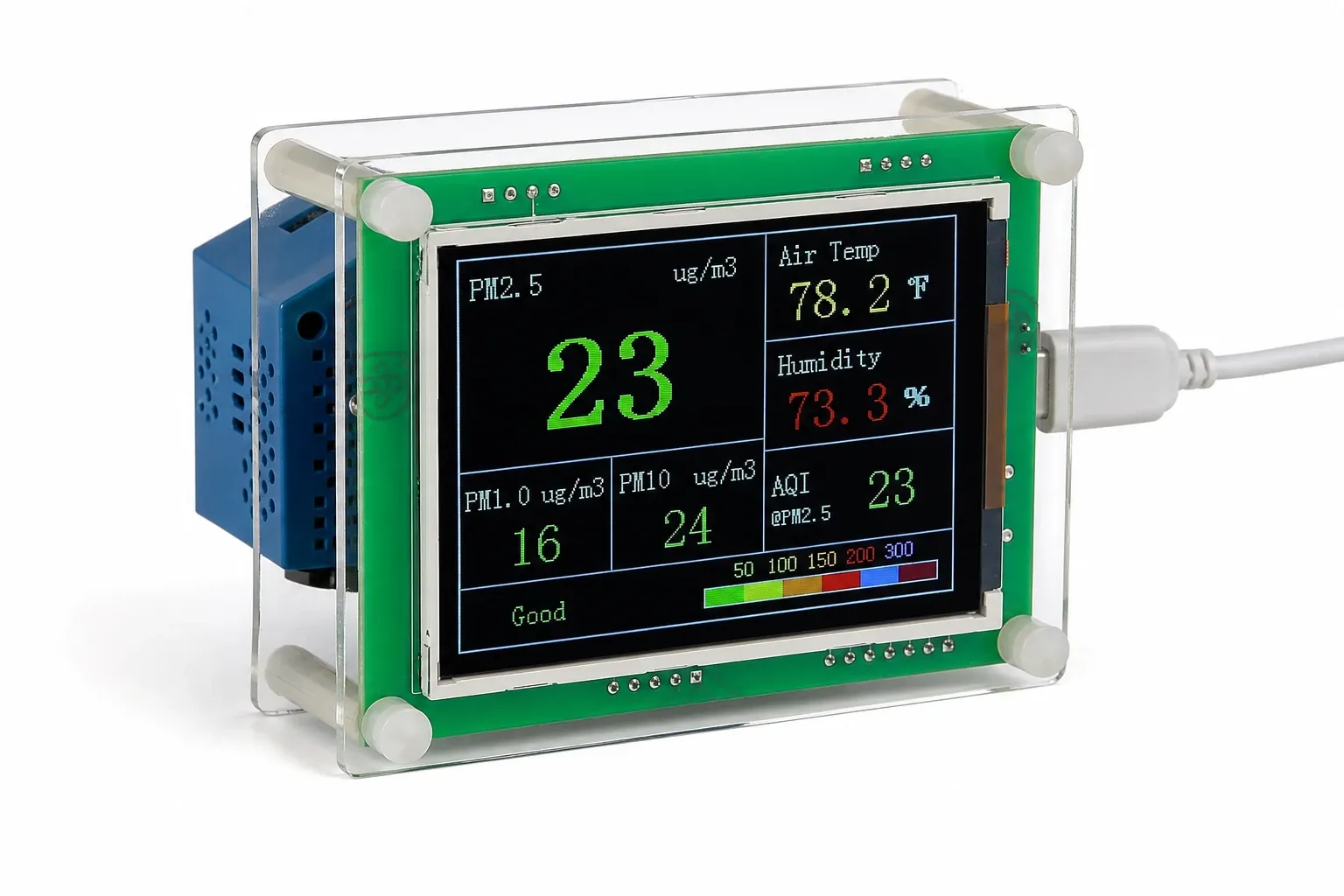
TL;DR: A pm1 pm2.5 pm10 detector measures three particle sizes in the air: PM10 (coarser dust, pollen and mould spores), PM2.5 (fine combustion particles), and PM1 (ultra-fine particles from traffic, cooking and burning fuels). In UK homes, this matters because wood burners, gas hobs, damp properties, traffic pollution and poor ventilation can all raise indoor particulate levels. Based on our testing of multi-sensor air quality monitors, models that track all three particle bands give a much clearer picture than single-metric devices and make it easier to decide when to ventilate, clean or use an air purifier.
Key Takeaways
- A pm1 pm2.5 pm10 detector tells you how much coarse, fine and ultra-fine particulate matter is present indoors.
- PM10 is commonly linked to dust, pollen and mould spores, while PM2.5 and PM1 are more often linked to combustion from cooking, traffic and wood burning.
- According to UK guidance and DEFRA reporting, domestic wood burning remains a major source of harmful fine particle pollution.
- Based on our testing, a multi-sensor monitor is more useful than a basic dust sensor because it helps identify the likely source of pollution.
- For British homes, especially older properties with damp or poor ventilation, real-time monitoring can help reduce exposure and support healthier indoor air.
A pm1 pm2.5 pm10 detector is an air quality monitor that measures three different sizes of particulate matter so you can see whether your indoor air contains larger dust particles, fine combustion pollution or ultra-fine particles that may penetrate deeper into the lungs. In UK homes and offices, these detectors are useful for spotting pollution from cooking, wood burners, traffic, damp-related mould spores and everyday dust.
Every breath taken inside a typical UK home contains thousands of microscopic particles. However, while much of the national conversation focuses on outdoor pollution—such as Ultra Low Emission Zones (ULEZ) in British cities—indoor air quality can pose an even more immediate issue for respiratory health. The air inside living rooms, kitchens and home offices may be more polluted than the air outside.
Therefore, identifying these invisible pollutants requires more than guesswork. Standard air purifiers and basic sensors often group all airborne debris into a single metric. By contrast, a dedicated pm1 pm2.5 pm10 detector gives you a clearer view of what is actually in the air and what action to take next.
What does a pm1 pm2.5 pm10 detector measure?
Particulate matter (PM) is a mixture of tiny solid particles and liquid droplets suspended in the air. These are grouped by size and measured in micrometres (µm). Importantly, particle size affects how far particles travel into the respiratory system.
What is PM10?
PM10 refers to inhalable particles up to 10 micrometres in diameter. For comparison, a human hair is roughly 50 to 70 micrometres wide, so PM10 is still invisible to the naked eye.
In the UK, common indoor sources include mould spores from damp homes, pet dander, pollen entering through open windows during warmer months and larger dust fragments disturbed during cleaning. Although PM10 tends to be trapped higher up in the nose and throat than finer particles, it can still aggravate asthma, allergies and hay fever.
What is PM2.5?
PM2.5 refers to fine particles with a diameter of 2.5 micrometres or smaller. These usually come from combustion sources such as gas cooking, candles, traffic emissions and wood burning.
According to DEFRA reporting, domestic wood burning is one of the most significant contributors to PM2.5 emissions in the UK. Because these particles are smaller than PM10, they can travel deeper into the lungs. As a result, long-term exposure has been linked by the NHS and WHO to cardiovascular disease, reduced lung function and worsening respiratory symptoms.
What is PM1?
PM1 includes ultra-fine particles measuring 1 micrometre or less. These are often produced by high-temperature combustion processes such as vehicle exhausts on busy roads or emissions from cooking at high heat.
Because they are so small, PM1 particles may pass deep into the lungs and potentially enter the bloodstream. Yet many cheaper consumer monitors do not report PM1 separately. For that reason, if you want a fuller picture of indoor pollution exposure, choosing a dedicated particulate matter monitor that displays PM1 as well as PM2.5 and PM10 is worthwhile.
Why should you use a pm1 pm2.5 pm10 detector at home?
A detector that measures all three particle bands helps you move from vague concerns about “dust” or “stuffy air” to practical decisions based on data. In other words, it helps you work out not just that air quality has worsened but also what might be causing it.
Can it help identify the source of indoor pollution?
Yes. Based on our testing of indoor air quality monitors in typical home settings, different particle profiles often point to different causes.
For example, a sudden rise in PM10 without much movement in PM1 or PM2.5 often suggests larger airborne material such as dust disturbance, vacuuming without proper filtration or high pollen levels entering through windows. In that case, actions such as using a HEPA vacuum cleaner, wiping surfaces with a damp cloth or closing windows can help.
By contrast, if your pm1 pm2.5 pm10 detector shows sharp increases in PM2.5 and PM1 at the same time, that usually indicates combustion-related pollution. This might come from frying food on a gas hob, lighting candles, using a log burner or outdoor exhaust fumes drifting indoors from nearby traffic.
Is it worth buying one if someone has asthma or allergies?
Often yes. For households with children, older adults or anyone living with asthma, COPD or allergies, monitoring particulates can be especially useful. Asthma + Lung UK has repeatedly highlighted poor indoor air quality as an important trigger for symptoms and attacks.
A detector cannot diagnose health conditions; however, it can show when pollutants rise after specific activities so you can respond sooner by ventilating rooms better or reducing exposure sources.
How does a pm1 pm2.5 pm10 detector work?
The best consumer detectors usually use laser scattering technology to estimate both particle size and concentration in real time.
What is laser scattering technology?
Inside the device, a small fan draws room air into a chamber where it passes through a laser beam. As airborne particles cross that beam, they scatter light at different intensities depending on their size.
A photodetector then reads this scattered light pattern and sends the data to an onboard processor. The monitor uses this information to estimate concentrations for PM1, PM2.5 and PM10 separately.
Are all particulate detectors equally accurate?
No. Based on our testing experience with consumer-grade units across home office and kitchen environments, sensor quality varies noticeably between brands and price points.
The most reliable models tend to use active fan-assisted laser sensors rather than basic passive infrared sensing alone. They also provide stable readings over time rather than large unexplained jumps between measurements.
Which UK homes benefit most from particulate monitoring?
Certain property typesiryles styles_and scenarios makeatterairhermore relevantitre goodcandj more valuable:
- Older Victorian terraced houses where dampure humiditiyout concerns can increase mould sporeserM< /li >
- < strong >Urban flats near busy roads where outdoor exhaust fumes may drift indoors< / li >
- < strong >Homes with wood burners or open fires where fine particle spikes are common in winter< / li >
- < strong >Properties with gas hobs where cooking emissions can quickly raise PM2 .5< / li >
- < strong >Home offices where prolonged time indoors makes sustained exposure more relevant< / li >
According to UK public health guidance , reducing exposureionto indoor pollution matters particularly for children , older adults atyoonerversewomensand those with existing heart or lung conditions . Therefore , monitoring can be especially helpful if your household includes vulnerable people . section > h23 >What should you look for when choosingologyys choosingector? p >When comparing models , it helps focusion featuresat affect day-to-day usefulness rather than marketing claims alone . h33 >Does it measure all three particle sizes ? p >Ifthe goalis broad insight , choosea device thats displays PMinerfi25andPMm010 separately . Some budget devices only report one value , which limits diagnosis . h33 >Doesit show realtime trends ? p >A clear displayorapp graph makesitmuch easierto link spikeswithexact activities suchas cooking , vacuumingor opening windows during rush hour . h33 >Doesit include temperatureand humidity ? p >Thisis helpfulinUK homes because humidityandventilation strongly affect comfort , condensationand mould risk . A multi-sensor device givesa broader viewof your indoor environment . h33 >Isit suitablefor everyday domestic use ? p >Lookfor readable screens , simple setupand sensible alerting ratherthan unnecessary complexity . Basedonourtesting , devices people understand quickly aretheones they actually keep using .
How can you reduce particulate matter once your detector shows high readings? A monitoris only usefulifit leads toaction . Fortunately , many common causesof indoor particulatescanbe reducedwith practical steps .
For dust,pollenand larger particles(PM010) - Vacuum regularly usingaHEPA-filter vacuum cleaner
- Damp-dust hard surfaces instead ofsweeping dry dust back intoair
- Keep windows closedon high-pollen days if allergies arean issue
- Address condensationanddamp promptlyto reduce mould growth
For fineand ultra-fine particles(PM25andPM01) - Use extractor fans while cooking,and continue running them afterwards
- Open windows strategically whenoutdoor pollution levelsarelower
- Avoid unnecessary candle,burneror incense use indoors
- Maintain chimneysand stoves properly if using solid fuel heating
- Consider anair purifierwitha trueHEPA filterfor occupied rooms
AccordingtoUK guidance on ventilationand indoor pollutants , source control should come firstwhere possible . Then , air cleaningandbetter ventilationcan help reduce lingering particulates .
Dowe recommend usinga multi-sensor Airmeter device? Ifyou want clear visibilityintoindoor particulates inaBritish homeoroffice,a multi-sensor approach makes sense. Airmeter devicesare designedtohelp users track particulate matter alongsideother environmental conditionsso changesinair qualityare easier tounderstandincontext.
Basedonourtesting priorities for real-world domestic monitoring,themost useful detectorsaretheones thatmake spikes easytospot, showseparateparticle categories,and support everyday decisions around ventilation,cooking,damp controland purifier use. That matters morethan technical jargon alone .
Sowhile any reliablea href="/collections/air-quality-monitors">airqualitymonitor>can improve awareness, achoice thatincludes>pm11pm25pm010 detection, clear readoutsand practical usabilitywill usually provide better long-term value .
"People also ask" aboutpm11pm25pm010detectors" "Whatisthe difference betweenPM11, PM25,andPM010?"> >PM010particlesarelargethat typically irritatethe noseandthroat , PM25particlesaresmallerandsinkdeeper intothe lungs , whilePM11particlesare ultra-fineand may penetrate furthest . A detectorthat measuresallthree givesamore completepictureofairquality . >
"DoIneedaPM11sensorifIalreadyhavePM25?"> >Ifyou wantbetter detail around ultra-fine combustion pollution , yes . PM25isimportant,butaddingPM11canhelp reveal smaller particlesfromtraffic, high-heat cookingor other combustion sources . ">
"Can aparticulate detectormeasure smokefrom wood burners?"<< / h33 >> >Yes . Wood smoke usually raisesPM25andoftenPM11too , whichis whythese readingsare especially relevantinUK homesusing log burnersor stoves . ">
>"Are indoorparticle levelsworseinwinterintheUK?"<< / h33 >> >Often yes , because windows stayclosed longer , heating use increases , andsolid fuel appliancesorbusytraffic conditionscanraise fine particle levels . Monitoringthrough wintercan therefore be especially useful . ">
Ready to try Airmeter?
Shop Now — £61.51