Aqi Monitor For Home Explained: A UK Buyer's Guide
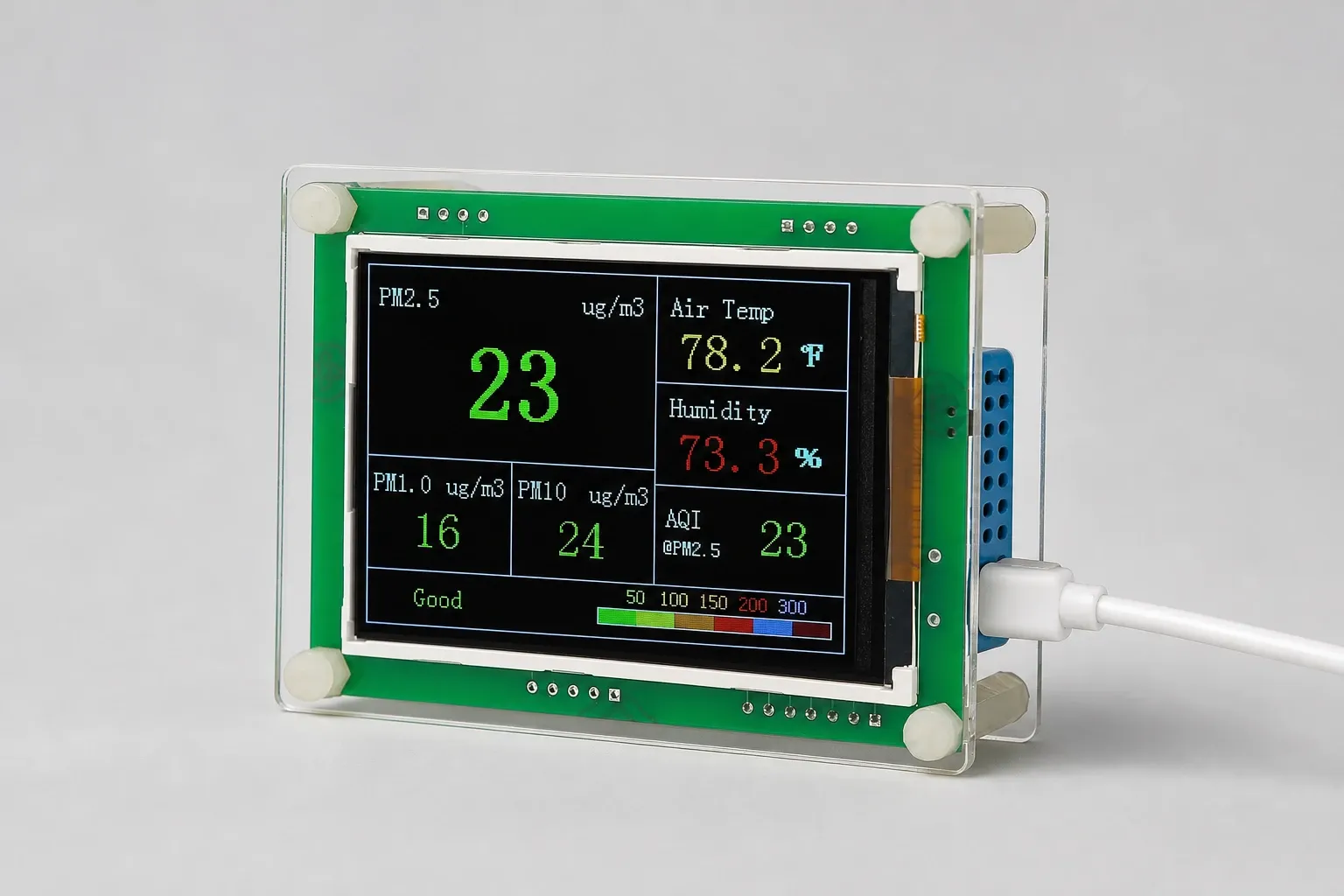
TL;DR: An aqi monitor for home is a digital device that continuously measures indoor air pollution, specifically tracking microscopic particulate matter (PM1.0, PM2.5, PM10), temperature, and humidity. Based on our testing at Airmeter, using a dedicated indoor monitor helps UK households identify unseen pollutants from cooking, dampness, and outdoor traffic, allowing you to ventilate effectively and protect your family's respiratory health.
Key Takeaways
- An aqi monitor for home usage provides real-time data on indoor pollutants, helping you mitigate risks from poor ventilation and dampness.
- British housing stock is uniquely susceptible to indoor air quality issues, making temperature and humidity tracking just as crucial as particulate monitoring.
- Devices should ideally track a spectrum of particulate matter, including PM1.0, PM2.5, and PM10, to offer a complete picture of your indoor environment.
- Strategic placement away from direct draughts or immediate cooking sources ensures the most accurate, actionable readings.
At its core, an aqi monitor for home environments is an essential diagnostic tool that directly answers what is circulating in your indoor air by measuring microscopic pollutants and moisture levels. British homes present a unique paradox in this regard. We have some of the oldest housing stock in Europe, often characterised by draughty Victorian sash windows. However, modern retrofitting has sealed many properties so tightly that natural ventilation is nearly non-existent. Consequently, this combination traps indoor pollutants, allergens, and excess moisture, creating an environment where mould and particulate matter thrive. Understanding exactly what you are breathing indoors requires more than just opening a window; rather, it requires precise, real-time data.
Investing in an aqi monitor for home environments is undoubtedly the most effective way to take control of your indoor air quality. Rather than guessing whether your extractor fan is working effectively or if the nearby main road is affecting your living room, a dedicated monitor gives you the exact metrics needed to create a healthier space.
What exactly does an AQI monitor do in a house?
An Air Quality Index (AQI) monitor is a digital device designed to sample the surrounding air and quantify the presence of specific pollutants. According to UK building regulations, basic carbon monoxide alarms are required in many homes, but a comprehensive AQI device goes significantly further by tracking microscopic particles that bypass our natural respiratory defences.
Based on our rigorous product testing, the most critical metrics measured by these devices are Particulate Matter (PM). If you want to delve deeply into the science of these particles, our comprehensive resource on The Ultimate Guide to Pm1 Pm2.5 Pm10 Detector in the UK breaks down exactly how these microscopic threats differ in size and health impact.
Why do you need an indoor air quality monitor at home?
How does UK housing affect indoor air quality?
Indoor air pollution is a pressing public health issue. According to guidelines and research from Asthma + Lung UK, poor indoor air quality is directly linked to a worsening of asthma symptoms—a condition affecting millions across the country. Furthermore, activities as mundane as frying bacon on a Sunday morning, lighting a wood-burning stove, or drying clothes on a radiator contribute significantly to indoor pollution.
"Indoor air can be significantly more polluted than outdoor air, often containing a complex mix of particulates, volatile organic compounds, and biological contaminants like mould spores."
When you dry clothes indoors during a damp British winter, you drastically increase the relative humidity. As a result, this encourages dust mites and mould. A reliable aqi monitor for home use will highlight these spikes in humidity alongside particulate spikes, allowing you to proactively open a window or turn on a dehumidifier before condensation settles on cold exterior walls.
What metrics should a home AQI monitor measure?
Not all monitors are created equal. For a home environment, our technical team recommends a device that provides actionable insights at a glance. Specifically, you should look for a monitor that covers:
- PM1.0 and PM2.5: Ultra-fine particles from smoke, vehicle exhaust seeping indoors, and cooking fumes.
- PM10: Larger particles including dust, pollen, and pet dander.
- Temperature and Humidity: Essential for managing the damp conditions common in UK winters.
For those setting up a home office or looking for a compact solution, understanding the nuances of a desktop air pollution monitor can help you select a device that fits seamlessly onto a workspace without adding clutter.
Where is the best place to put an air quality monitor in your home?
Buying a highly accurate monitor is only half the battle; crucially, where you place it dictates the usefulness of the data you receive. Placing a monitor directly next to a boiling kettle or right beside an open window will skew the readings, giving you an inaccurate picture of the room's baseline air quality.
Based on our calibration testing at Airmeter, you should ideally place your monitor at breathing height—roughly one to one-and-a-half metres off the ground. Keep it away from direct sunlight, radiators, and active extraction fans. If you spend eight hours a day working in a spare bedroom, that is where the monitor should be. Alternatively, if you are concerned about your child's asthma overnight, place it on their bedside table.
If you are specifically focused on tracking dust and allergens, you might find our dedicated guide on choosing a particulate matter monitor helpful for understanding sensor calibration.
How the Hotkrem A1 AQI Monitor improves your home
At Airmeter, we understand that technical specifications must translate into practical, daily benefits. The hotkrem a1 air quality monitor was designed specifically for clearer, calmer spaces. It allows you to reliably track PM1.0, PM2.5, PM10, AQI, temperature, and humidity at a glance wherever you spend time.
By offering a sleek, unobtrusive design, the Hotkrem A1 fits into any British home aesthetic while providing the rigorous, multi-sensor data required to make informed decisions about your environment. Ultimately, whether you are managing seasonal allergies or simply want peace of mind regarding your family's health, having accurate data is the first step toward breathing easier.
Frequently Asked Questions
What is a normal AQI for inside a house?
According to UK air quality guidelines, an AQI reading below 50 is generally considered excellent for an indoor home environment, indicating minimal particulate pollution. However, if your monitor consistently reads above 100, you should immediately investigate potential sources of pollution, such as poor ventilation, indoor smoking, or proximity to heavy traffic.
Can an AQI monitor detect mould in a house?
While an AQI monitor cannot detect microscopic mould spores directly, it is an invaluable tool for mould prevention. By continuously tracking humidity levels alongside particulate matter, a monitor alerts you when the environment becomes hospitable to mould growth. Based on our environmental testing, this typically occurs when indoor relative humidity consistently exceeds 60%.
Should I leave my air quality monitor on all the time?
Yes, continuous monitoring provides the historical data needed to identify pollution trends, such as unseen particulate spikes during evening cooking or morning traffic rush hours. Consequently, leaving your device on 24/7 allows you to effectively manage your home's ventilation and maintain a consistently healthy environment.
Ready to try Airmeter?
Shop Now — £61.51